
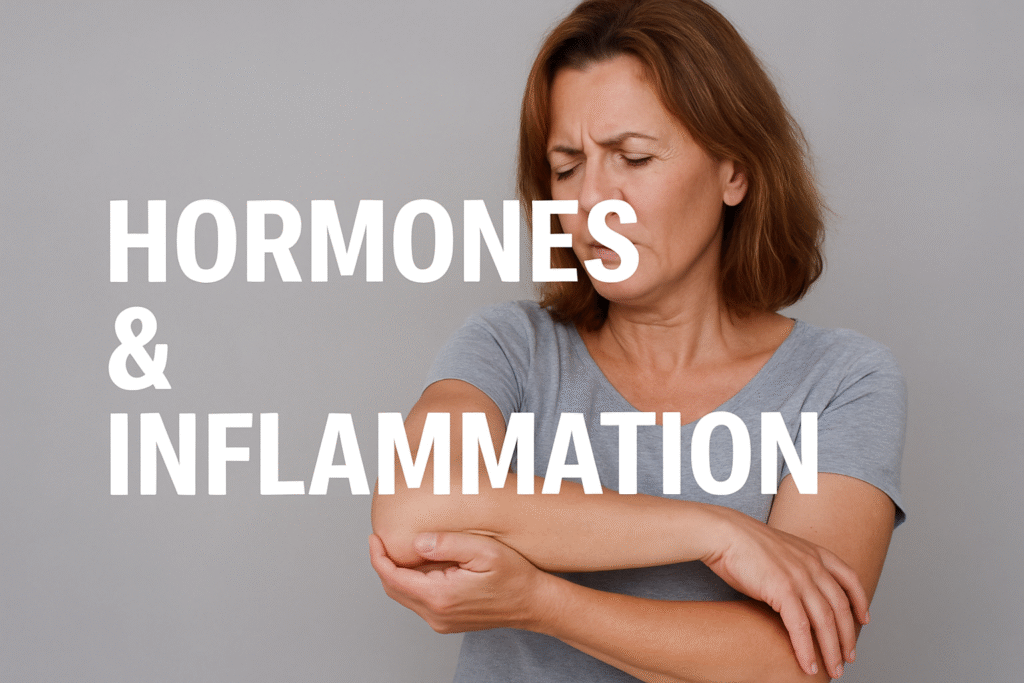
Welcome to Week 6 of Hot Hormone Summer!
So far, we’ve covered andropause (Week 1), menopause (Week 2), pre- and perimenopause (Week 3), PCOS (Week 4), and bioidentical vs synthetic hormones (Week 5). Today, Dr. Ramsey dives into how hormones influence inflammation and stress.
Hormones and Inflammation: What the Research Shows
The medical literature is clear: as we lose hormones one at a time, inflammation steadily rises. Each hormone plays a unique role in keeping stress and inflammation in check.
-
Progesterone: The first hormone women lose in menopause. When progesterone levels drop, inflammation goes up. Replacing it helps lower inflammation.
-
Estradiol: As estradiol decreases, inflammation and stress rise. Restoring estradiol helps reduce both.
-
Testosterone: In both men and women, low testosterone contributes to higher stress and inflammation. Replacing it reverses this effect.
-
Vitamin D3: Despite the name, Vitamin D3 functions as a hormone. When levels are low, cancer risk increases and patient outcomes worsen. Maintaining healthy Vitamin D3 is critical for lowering inflammation and supporting long-term health.
-
Thyroid Hormone: Even “normal” levels aren’t always optimal. Low thyroid function contributes to inflammation and symptoms like pain, constipation, depression, and fatigue. Optimizing thyroid levels reduces stress and inflammation.
Why This Matters (Dr. Ramsey’s perspective)
When hormone levels drop across the board, stress and inflammation rise. When we restore hormones to optimal levels, stress and inflammation decrease supporting better energy, mood, and long-term health.
Want more insights on hormone risks, symptoms, and solutions?